School choice advocates and two Philadelphia lawmakers are urging Gov. Josh Shapiro to opt into a federal tax-credit scholarship program that would pay for private school tuition and other education expenses.
But Shapiro is delaying his decision until President Donald Trump’s administration releases rules laying out how much control and accountability states will have over the federal program.
The strategy from Shapiro and other Democratic governors to put off making a yes-or-no decision on the tax credits reflects the barrage of political pressures they are facing.
Supporters of the tax credit say that governors who spurn the program are simply losing out on funding that will go to other states, instead of helping their students. But embracing a measure backed by the Trump administration that promotes private school choice might clash with the ideological preferences of Democratic officials and many of their voters.
Pennsylvania already authorizes two tax-credit scholarship programs, the Opportunity Scholarship Tax Credit and Educational Improvement Tax Credit. Both give tax breaks to businesses that donate to organizations that provide private school scholarships to students.
But the federal program doesn’t rely on state funding. The new federal tax credit, which passed last summer as part of the One Big Beautiful Bill, would reimburse taxpayers for donations of up to $1,700 annually to scholarship-granting organizations.
The program allows donations to pay for more than just private school tuition. Proponents say those scholarship funds could be put toward tutoring, after-school programs, education technology and other educational expenses for both private and public school students.
But there are still many questions unanswered.
The U.S. Treasury Department is developing rules outlining how much authority states will have over the program. Those rules could spell out how public school students could benefit alongside private school students, or whether states could require that scholarship granting organizations serve only low-income families or prohibit them from discriminating against LGBTQ students and teachers.
The rules could also outline how the federal program may or may not stack with existing state tax-credit scholarships.
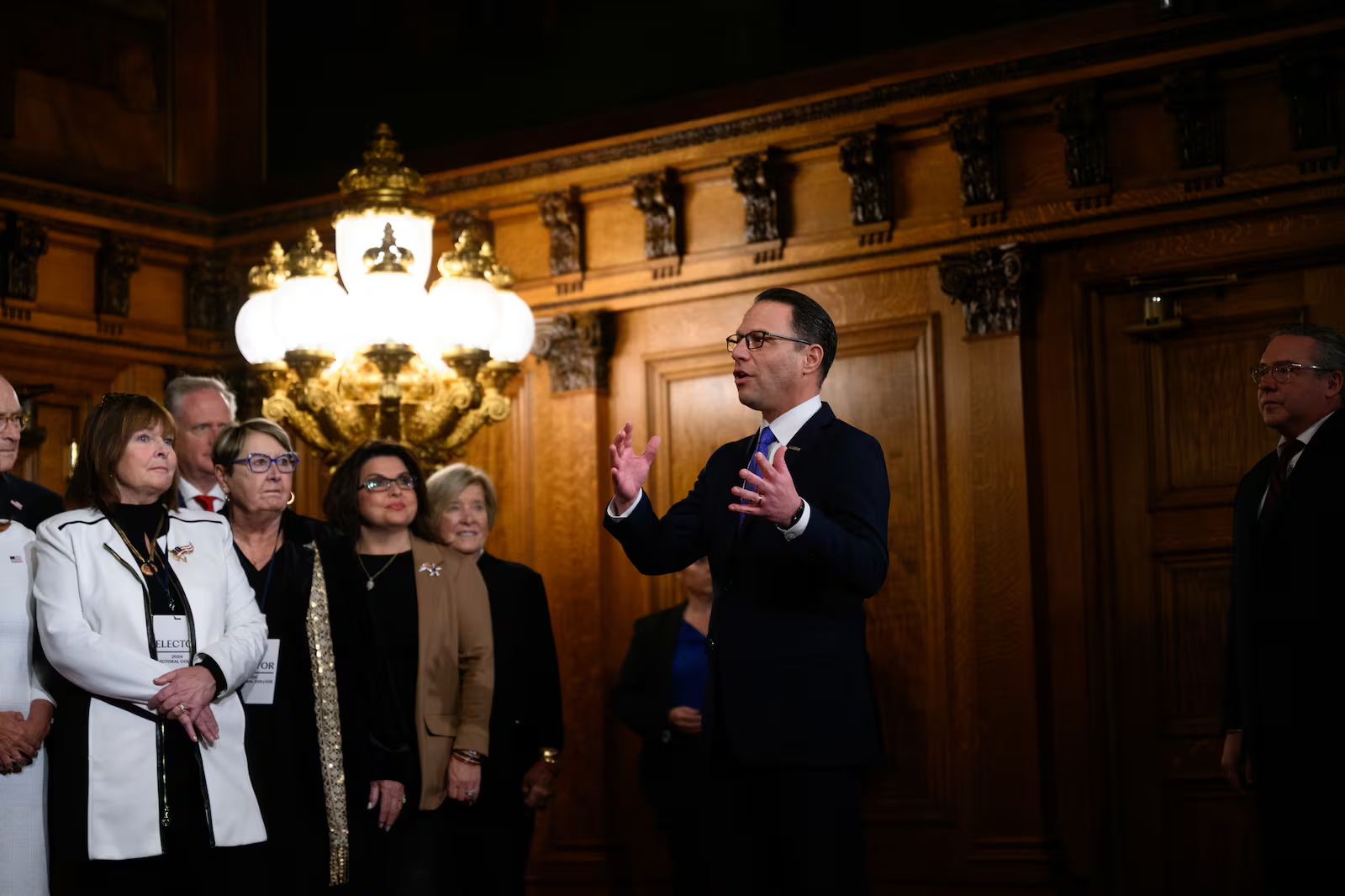
A spokesperson for Shapiro said in a statement Thursday his office is “awaiting federal guidance to address key questions about how this program would work, including which students will be eligible, how this federal initiative will interact with existing programs.”
Meanwhile, Democratic and Republican supporters of the tax credit made their case at a press conference Thursday.
“If Pennsylvania does not opt in, residents here can still claim the [tax] credit, but their donations will go to scholarships in other states,” state Rep. Martina White, a Republican who represents parts of Philadelphia, said at a press conference on Thursday. “In other words, Pennsylvania taxpayers will help fund scholarships elsewhere while our students miss out.”
Democratic state Sen. Anthony Williams, who represents Philadelphia, was not in attendance on Thursday, but sent a statement in support of the federal program.
“If Pennsylvania chooses to opt out, then we can say with certainty that the first $1,700 of every single Pennsylvania taxpayer’s federal taxes will leave the state, and it’s going to go to the U.S. Treasury, to the IRS,” Jorge Elorza, CEO of Democrats for Education Reform, said at the press conference. “Who knows what’s going to happen with the money when it gets there?”
But Susan Spicka, executive director of the public education advocacy group Education Voters PA, told Chalkbeat it is “wildly irresponsible for anyone to call for Pennsylvania to opt into the federal voucher program before Treasury issues rules delineating how the program will work.”
Spicka said without those rules, it’s unclear how much it will cost taxpayers for the state to implement and oversee the program.
Without clear accountability measures, Spicka worried the program could open the door “for extraordinary opportunities for waste, fraud, and abuse.”