Update, Oct. 2, 2026: Treasury has released the rules. Read what they mean for public schools.
In mid-September, a federal education official, a governor, researchers and union leaders met at a Harvard University conference on new school models. The talk kept turning to one program: the Federal Scholarship Tax Credit (FSTC), the new federal tax credit for donations to scholarship granting organizations. As The 74 reported on Sept. 23, “attention in recent months has shifted to the ways that public school students can benefit.” (The 74, Linda Jacobson, Sept. 23, 2026)
The rules that decide how much of this reaches public-school students are about to be published.
Where the rules stand (as of Sept. 30, 2026)
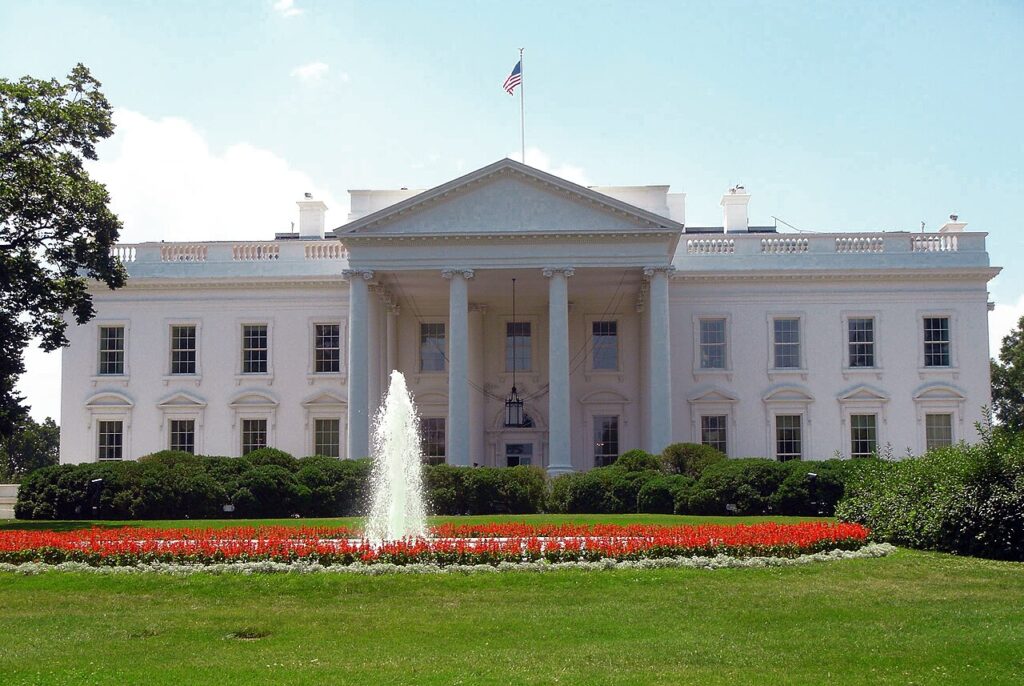
The White House Office of Information and Regulatory Affairs received two Treasury actions titled “Tax Credit for Contributions of Individuals to Scholarship Granting Organizations” on Sept. 10: a proposed rule and an interim final rule (temporary rules issued alongside the proposed rule). It concluded its review of both on Sept. 29, with the result “Consistent with Change.” (reginfo.gov, RIN 1545-BR97; reginfo.gov, RIN 1545-BS17)
White House review is typically the last step before a rule is published. In June, Treasury said it expected to issue proposed regulations “no later than the end of September,” and that “States, SGOs, and taxpayers will be able to rely on those proposed regulations for tax year 2027.” (Treasury, Preview of Forthcoming Section 25F Guidance, June 9, 2026)
Education groups also made their case during that final week. The White House’s own meeting logs show sessions on these rules requested by AASA, The School Superintendents Association, and the National Association of Education Foundations, along with disability and civil rights organizations. (reginfo.gov, EO 12866 meetings)
What the law already says about public-school students
Much of the public-school story is already in the statute. An eligible student is one who is “eligible to enroll in a public elementary or secondary school,” from a household with income at or below 300 percent of area median gross income. (26 U.S.C. 25F) So every eligible student starts from public-school eligibility.
Qualified expenses name public schools and services, not just tuition. Scholarships cover expenses described in section 530(b)(3)(A): expenses tied to a “public, private, or religious school,” including “academic tutoring,” “special needs services” for students with special needs, books and supplies, and, where required or provided by the school, “extended day programs” and transportation. Computer technology and internet access are also listed. (26 U.S.C. 530)
Treasury has already given a public-school example. In June it said: “Consistent with the statutory text of section 530, we fully intend that scholarships may be used to support additive academic tutoring and special needs services.” (Treasury, June 9, 2026)
For donors
Beginning Jan. 1, 2027, an individual can claim a federal tax credit of up to $1,700 a year for a cash gift to a scholarship granting organization (SGO) in a participating state. (IRS, Federal Scholarship Tax Credit) The credit is for individuals, not businesses. It is nonrefundable, and unused credit carries forward for up to five years. The federal credit is reduced by any state credit allowed “for qualified contributions made by the taxpayer during the taxable year”; how that reads against state programs is one of the questions the proposed regulations may answer. (26 U.S.C. 25F) Up to $1,700 per taxpayer. Under the proposed regulations, spouses filing jointly are treated as separate taxpayers, so a couple can claim up to $3,400 if each spouse gives at least $1,700. Separately, a bill introduced in September would write a doubled cap for joint filers into the law. (Office of Rep. Adrian Smith, Sept. 17, 2026)
Donations increase the scholarship funding available to eligible students in the community. They are not directed to any particular student.
The open questions public schools should watch for
The coming rules, and the separate expense guidance Treasury says will follow them, need to answer questions that decide how much of this reaches public-school students.
- Which services count, and when? The statute covers items “required or provided by” a school, and Treasury uses the word “additive.” How the rules define both will decide whether after-school, summer and transportation services qualify. Treasury has said expense guidance is “a separate workstream that will follow” the proposed regulations. (Treasury, June 9, 2026)
- How can districts and education foundations take part? An SGO must serve at least 10 students who do not all attend the same school, must spend at least 90 percent of its income on scholarships, and may not earmark contributions for a particular student. How those rules apply to district-affiliated foundations is still open. (IRS, Notice 2025-70)
- What can states add? Treasury said states “may not impose substantive SGO-specific requirements that are more restrictive than section 25F’s requirements.” (Treasury, June 9, 2026) Whether states can add conditions of their own will decide how different each state’s program looks.
- When are state SGO lists due for 2027? Lists are due by Jan. 1 each year, and for 2027 the IRS has said the date will be “specified in future guidance.” (IRS, Rev. Proc. 2026-6)
- Charter schools. Our reading: a charter-affiliated nonprofit that serves a single school may find the requirement to serve students “who do not all attend the same school” harder to meet than a district foundation would.
Some analysts have suggested that a district could set a fee for additive services such as tutoring or after-school care and let scholarships cover that fee for eligible students. (The 74, Marguerite Roza and Maggie Cicco, Aug. 3, 2026) That is a proposal, not a rule. Whether it works depends on how the proposed regulations and the later expense guidance read “additive” and “required or provided by.”
If your state has not yet elected to participate
Participation is a state decision, made by the governor or by whoever state law designates. (26 U.S.C. 25F) The IRS keeps the current list of participating states on its FSTC page. In a state that has not yet made its election, residents can still claim the credit by giving to an SGO in a participating state, but those scholarships serve students in that other state, and no scholarship under this program can reach students in a state until it elects. (26 U.S.C. 25F) Michigan State University professor Josh Cowen told The 74 that whether more states take part may depend on how useful the program proves to be for public schools. (The 74, Sept. 23, 2026)
What to do now
Three things are worth doing before the rules land. First, make a list of the tutoring, special-needs, after-school, summer, transportation and technology services your families pay for now, or would if cost weren’t the barrier. Don’t relabel anything you already provide free; the rules on “additive” and “required or provided by” aren’t out yet. Second, find out which SGOs will serve your state, because scholarships flow through state-listed SGOs, not directly to schools. Third, plan to comment. When the proposed regulations publish in the Federal Register they will open a public comment period, and districts and education foundations that want a say in how “additive” services are defined will have that window to file.
The day the rules come out, we’ll post a plain-language review here of what they say and how they apply to public schools.
Nothing here is legal or tax advice. The rules, when issued, and any later guidance will control.
FundEDU helps schools make sense of scholarship tax credit programs. Talk with our team about what the Federal Scholarship Tax Credit could mean for your students.