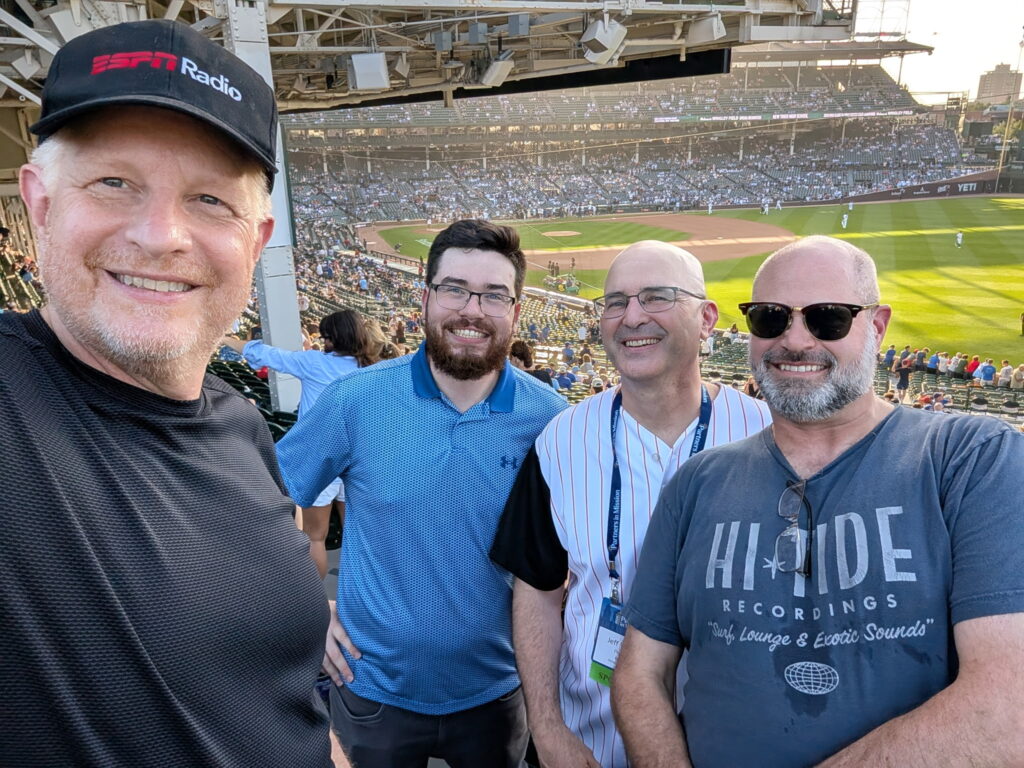
I just spent four days in Chicago at the Partners in Mission National Advancement Summer Institute, in a room with more than 600 Catholic school leaders from across the country. I went to talk about the incredible impact that Tax Credits have had on Education in Pennsylvania, as well as our hopes for the Federal Scholarship Tax Credit. I left having talked with more than a hundred presidents, principals, and advancement directors, one conversation at a time, and I want to share the single most important thing I heard. It was not a question about Treasury rules (which are still pending) or opt-in deadlines. Instead, there was a major concern, and it surfaced again and again, usually phrased something like this: "This sounds great, but we do not have the major donors to make another program work." I understand the fear. But that understanding has the FSTC exactly backwards, which is part of what I find so exciting about this new program.
Breadth, Not Big Gifts
Here is the math that changes the conversation. 600 donors giving $1,700 each will generate approximately a million dollars in new scholarship money. Not six donors. Six hundred. Many of them are easily reachable within your current community and alumni network because this credit costs the donor nothing on net. The federal government returns the entire $1,700 contribution as a credit on the donor’s taxes. That changes the ask completely. You are not asking anyone to part with or give up their money. Instead, the ask is that they redirect money they already owe the IRS to children at your school instead. That is a conversation you can have with almost anyone: a parent, a grandparent, an alum, a parishioner, the owner of the hardware store or coffee shop down the street. Anyone and everyone with federal tax liability is a potential donor.
Your Community Is Your Advantage
Chalkbeat ran a piece this week suggesting that this credit could require enormous marketing spending, highlighting that one major school choice group estimated it might cost over $300 to persuade each individual taxpayer to give. The reason is simple: when considering this program on a national scale, it seems as if we have to convince millions of strangers, one by one. But the good news is that you, and most school communities, are not starting from strangers, and that is the whole point. Your community already exists. It is driving by your campus over the weekend and idling in your pickup line on Monday. The families who love your school, the graduates who fondly remember it, and the neighbors who believe in, and benefit from, your presence in their community are a donor base that a national campaign would spend millions to build. However, your cost to reach them is only the time it takes to prepare for, and hold, a conversation. That is an advantage the national players do not have, and it is sitting right in front of you.
What This Looked Like at Bishop Guilfoyle
During the PiM conference, and as evidence of how impactful a community-driven approach to tax credit funding can be, I presented alongside Joe Adams, president of Bishop Guilfoyle Academy. In doing so, our message was simple: the results follow when you engage the whole community instead of chasing a handful of gifts. When a school treats every family as part of the mission, the giving takes care of itself and can be truly transformational.
Start This Fall
While donations themselves do not begin until January 2027, Fall 2026 is the most important season you have, because the donor base you build now is going to be the base you convert then. In ten years of this work, I have watched the same pattern hold: the schools that start early and reach wide are the ones still celebrating over a decade later. Two things you can do before the leaves turn:
-
First, use the back-to-school season to introduce the FSTC to your whole community, not only your board. Your faculty, your families, your alumni, and your parishioners should all hear about it from you.
-
Second, start a simple list of everyone in your orbit who has federal tax liability. That list becomes your roadmap for early 2027 donor conversations, which will ultimately fund the scholarships supporting your students for the 2027–2028 academic year.
One word of caution: the Treasury Department is still finalizing the rules, so stay tuned to our pages, and confirm the final program details before acting on them. You do not have to build any of this alone. If you want help turning your community into a scholarship engine this fall, our FSTC Readiness tools are the place to start.